

Marketing is not a launch week activity
Why most studios misunderstand the role of marketing and why this mistake quietly undermines good games
Many studios treat marketing as something that begins once the game is nearly finished. They imagine a sequence of events. The trailer releases. Influencers play the game. Ads run for a week. Social posts begin to appear. The Steam page receives visitors. The launch window opens and everything finally becomes visible. This model feels intuitive because it matches the way movies, technology products and physical goods often behave. Yet it is one of the most damaging assumptions a game studio can make.
Games are not consumed the way other products are. Games require understanding, imagination and emotional context long before the player decides to click a wishlist button. The discovery environment for games is driven by behavior on TikTok, YouTube, Steam, Discord and creator ecosystems that reward early clarity rather than late spectacle. When a studio attempts to concentrate marketing around launch week, it tries to force a moment of recognition that should have been earned months or even years earlier. Launch week becomes an attempt to introduce the game at the very moment the studio needs the audience to already care. Understanding when to start marketing helps avoid this trap.
This is why so many launches feel confusing. The team sees a complete product. Players see something they have only just encountered. The gap between those two perspectives explains more failed releases than any performance issue or design flaw.
Players do not discover games on launch week. They confirm them.
The belief that a game becomes visible at launch is a misunderstanding of player behavior. Steam does not create interest for you. It amplifies interest that already exists. The same is true for influencers, media coverage and algorithmic platforms. These systems do not introduce your game from scratch. They reinforce an expectation that players have formed long before release.
A player who wishlists a game during launch week does not enter the page as a stranger. They arrive with a partial memory. They saw a clip months ago that made them pause. They heard a creator mention a mechanic. They saw a moment that communicated something clear. They remember the feeling even if they cannot recall the title. This is the psychological foundation of discovery. Launch week is not the beginning. It is the completion of this internal loop. Steam's discovery queue algorithm favors games that already have engagement momentum.
When a studio waits until launch week to introduce the game, it forces players to make a decision with no accumulated context. The result is predictable. The player hesitates because the page has to build both identity and desire simultaneously. Most pages cannot do that. The player exits and the launch suffers not because the game is weak but because the studio misread how players make decisions.
Marketing works by shaping recognition, not by demanding attention
A strong launch is the result of repeated signals that slowly form recognition. This recognition is not logical. It is familiar. The game appears in short form content. It appears in a community conversation. It appears in a creator's commentary. It appears in an early trailer. It appears again in a gif or a moment shared by another player. Over time the mind begins to categorize the game as something known. When launch week arrives, the player is not discovering the game. They are completing a thought that already existed.
Studios often believe that marketing is about generating visibility. In truth it is about creating meaning that becomes visible later. Visibility without meaning has no effect on behavior. Meaning without repetition remains invisible. Only when both are present does recognition take hold. Launch week is effective only when it activates recognition that the studio has built gradually. This pattern is especially critical for indie teams with limited resources.
This is why early and consistent marketing is not optional. It is the only way a game earns the right to be recognized when launch week arrives.
Launching cold forces the audience to process too much information at once
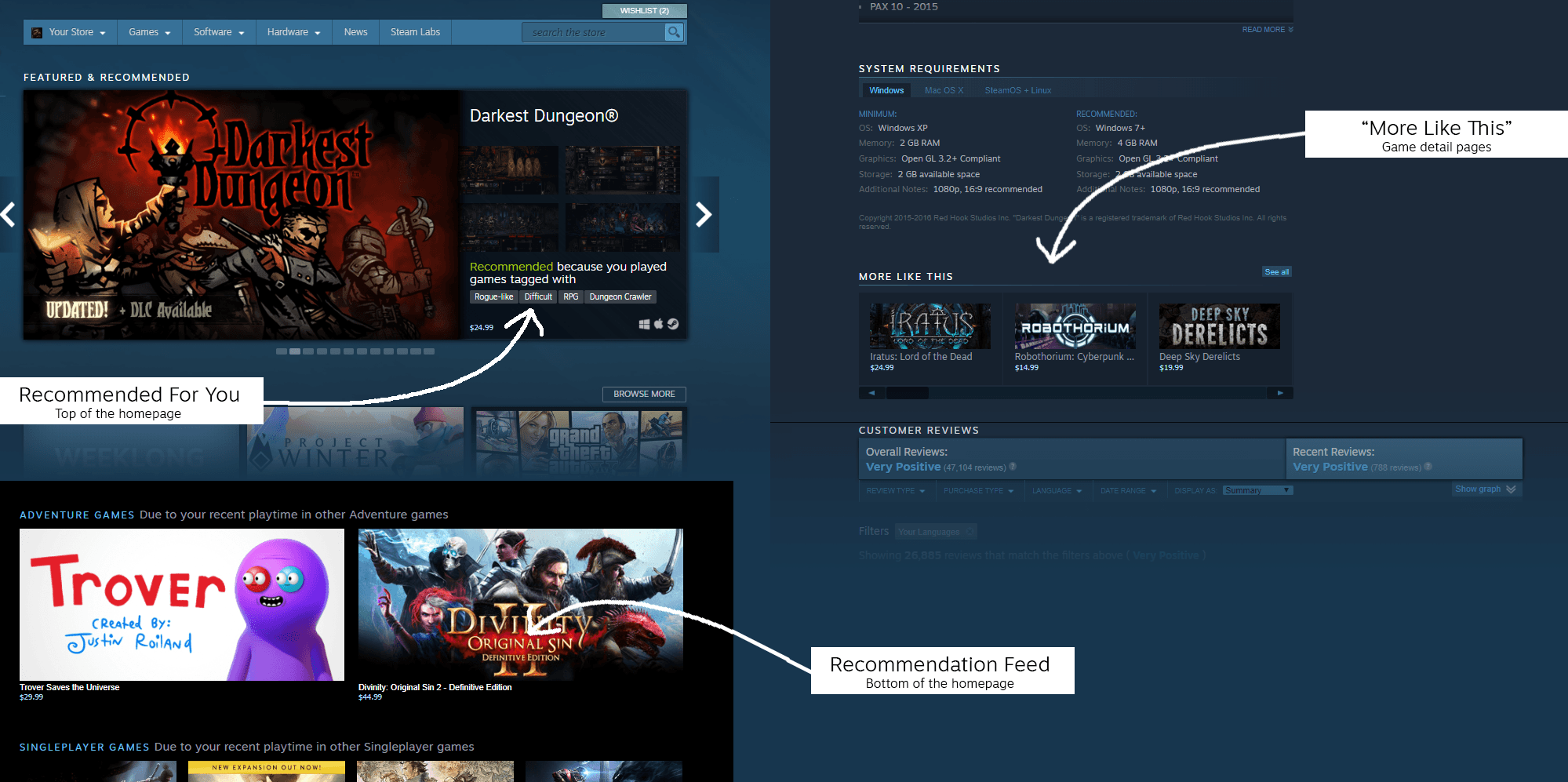
Most players spend only a few seconds deciding whether a Steam page deserves attention. These seconds are not enough to process story, mechanics, world building or the full identity of the game. Games that convert well have already provided players with internal scaffolding long before they reach the store page. The page does not have to explain everything. It only has to confirm what the player already believes.
When a game arrives at launch without prior marketing, the player is forced to process everything at once. They must decode genre, tone, camera, core loop, emotional rhythm and value in a single visit. They must understand the difference between this game and others that look similar. They must evaluate the trailer. They must form a mental model of how the game feels. Most players will not do this. The cognitive load is too high.
Marketing that begins early distributes this cognitive work over time. The player learns one thing at a time. A moment. A mechanic. A tone. A role. A fantasy. A rhythm. By the time the final trailer appears, the player already knows how to read it. Without this buildup the trailer becomes noise and the page becomes overwhelming.
Newsletter
A premium newsletter for game studios and publishers
Deep strategy breakdowns, positioning frameworks, and practical systems for PC & console games.
$14.99/mo, cancel anytime.
Launch week should be the final step in a long pattern of contact
Players rarely commit to a game after a single exposure. The process is cumulative. They see a clip that captures their attention. They see another one that reinforces the idea. They watch a creator test an early version. They notice that people in their community share the same reaction. Each of these moments adds weight to the perception of the game. Recognition forms slowly. Desire grows when the idea feels familiar. Research from GDC talks on game discovery consistently supports this cumulative model.
Launch week is the moment when the accumulated interest becomes action. It is not the time to introduce the game. It is the time to close the loop. When studios attempt to generate all of this weight at once, nothing sticks. The audience sees the message but it has no anchor. They understand the game in principle but do not yet feel any connection.
Marketing that begins months or years in advance gives players space to build their own relationship with the idea. By the time the launch approaches, the question is no longer whether the game looks interesting. The question becomes whether now is the moment to join it.
Without early marketing the studio loses the chance to correct course
Marketing does not only shape awareness. It shapes production. Early posting reveals which moments resonate. Early Steam page analytics show whether the pitch is clear. Early short form reactions reveal whether the camera language is readable. Early creator testing reveals whether the game can be retold easily. Each of these signals influences decisions that have real production cost. This feedback loop is essential for avoiding the poor marketing decisions that undermine good games.
When a studio waits until the game is nearly finished, these signals arrive too late to matter. The trailer cannot be rebuilt. The page cannot be reconceived. The systems cannot be rebalanced. The studio discovers the truth of its communication only at the moment when the communication cannot be changed. Launch week becomes a painful confrontation with problems that were solvable months earlier.
Marketing that begins early makes production smarter. Marketing that begins late becomes a postmortem.
The real purpose of marketing is to reduce uncertainty, not to create hype
Hype is a by product. It is never the primary function of marketing. The actual purpose of marketing is to remove uncertainty from the relationship between the game and its potential audience. Studios begin with assumptions. Players reveal which assumptions are correct. Marketing gathers these signals. Production adapts. Over time the studio gains clarity and the audience gains familiarity. For teams working without dedicated marketing resources, this iterative approach is even more important.
Launch week should be a celebration of this shared understanding. It should not be the moment when the studio learns how players interpret the game for the first time.
When marketing is treated as a launch week activity, the studio carries all uncertainty into the final days. It learns what players think only when it is already too late to respond. This creates anxiety inside the team, inconsistency in communication and confusion among players. When marketing begins early, that uncertainty fades long before launch. The result is confidence on both sides.
The truth is simple
Marketing is not the act of announcing your game. Marketing is the process of teaching players how to understand it. This teaching cannot happen in a single week because understanding does not form in a single moment. It forms through repeated exposure, gradual clarity and a growing sense of recognition.
Launch week is important, but it is not the beginning of the story. Launch week is the point where the story should already make sense.
A studio that treats marketing as a late stage activity forces its audience to learn too much too quickly. A studio that begins early allows players to discover the game at a natural pace. This difference determines whether the launch feels effortless or painful.
Marketing is not something you do when the game is ready. Marketing is something that helps the game become ready.

I’m a marketing consultant helping PC and console studios build systems that grow wishlists and sales with clarity, not chaos.
I work with teams that want predictable growth across the full lifecycle of a game: Steam optimization, store asset improvement, messaging, analytics, creator strategy, and launch planning. My approach combines structured decision making with practical execution so developers can focus on building the game while the marketing foundation scales with them.
- Steam visibility, conversion and wishlist growth
- Store assets: capsules, trailers, messaging, positioning
- Analytics frameworks and marketing decision systems
- Creator and influencer pipeline setup
- Launch strategy for PC and console games
- Long term marketing systems, not one off tactics